Welcome!

Welcome! Ultralight backpacking is my passion, and keeping up on new technologies, gear, and techniques relevant to UL backpacking is what floats my boat. I'm always looking for the lightest, most functional gear to improve a lightweight or ultralight backpacking kit, and report my impressions and field testing results here. For hikers wanting to keep up on the latest and greatest ultralight backpacking gear, this is a good place to hang out. Also, there is a lot of information here (and on our informational website Southwest Ultralight Backpacking) on useful techniques and backcountry etiquette -- food for thought for hikers wanting to lighten their load and their impacts.

My goal for Ultralight Insights is to understand, test, and report on new technologies and gear of interest to lightweight and ultralight backpackers. It's a passion after all, so we just plain enjoy talking about it. I hope readers will add their own wisdom and comments, respond to my questions, ask their own questions, and correct me if I get something wrong. Happy hiking! Will

Wednesday, January 13, 2016

Outdoor Retailer Winter 2016: NEW TECHNOLOGIES


By Will Rietveld

New technologies that will drive future gear design are unveiled at nearly every Outdoor Retailer trade show. Gear is continually evolving as new technologies are incorporated in an effort by companies to stay on the cutting edge and be competitive. Following is a look at new technologies, and updates on developing technologies, showcased at the winter 2016 Outdoor Retailer Show.

Allied Feather and the Responsible Down Standard. I reported on the Responsible Down Standard in previous OR coverage. Having worked intimately with The North Face to develop the Responsible Down Standard, Allied Feather & Down claims to be the first adopter and primary supplier of certified responsibly sourced down for the outdoor industry.

This time on my visit with Allied Feather and Down I learned more about the Track My Down label attached to down garments using sustainably sourced down. It’s worth the effort to track the down in your newly purchased garment; simply scan the QR code on the label, or go to Trackmydown.com and enter the number on the bottom of the label. The amount of information that comes up is amazing. One thing of interest is the fill power, after treatment, for the down in the garment you just purchased. This particular lot of down turns out to be 904 fill-power rather than the advertised 800; lots vary so this one gives you a windfall. There is also loads of information on the country of origin, purity of the down, and how down is processed. Fascinating and educational.

Other news:
  • After a sharp rise, the cost of down is declining at the wholesale level but has not reached the consumer yet, especially for lower fill-power downs. But prices are holding for high fill-power down, which comes from mature birds and is more limited in supply. Down is a by-product of the meat industry, so lower FP down from younger birds is much more plentiful, and cheaper.
  • Down water-resistance treatments increase the fill-power of high fill-power downs, e.g. 900 FP can go to 1150 FP with treatment. However lower fill-power downs are harder to treat, and get less of a boost because they have fewer filaments.
  • So far, there is no evidence that water-resistance treatments affect the longevity of down.
  • Garment manufacturers are pulling back on their use of water-resistant down. That’s not because it’s not working, but because new technologies (like welded seams) reduce the need for it. They are focusing more on using it where it is actually needed.

WR Not DWR. While visiting with the folks at Downlite, they made the point that many down water-resistance treatments will wash out with only one or two launderings using a traditional laundry detergent. I didn’t know that! Downlite has shown that their Nikwax Hydrophobic Down will last at least five home launderings when paired with NikWax Down Wash Direct (photo). The Nikwax product properly cleans down garments and restores water-resistance. The product was reformulated in late 2015 to eliminate fluorocarbons. Next, I visited Nikwax to verify what I had heard. Their representative was a bit more optimistic, stating that most down water-resistance products should endure 2-3 washings.

This is definitely enlightening. The takeaway message is that these treatments impart water-resistance to down, but it is not a DWR for down, so take away the D (durable) part, its water-resistant but not durable water-resistant like the surface treatment on many garments that typically last through 80 or more washings. Bottom line, it’s still best to keep your down garments from getting dirty and wash them only when they really need it.

eVent DVdry LT for Footwear. Until now waterproof footwear has been based on a bootie or gasket, which places a waterproof-breathable sock inside the shoe, encasing the foot. With the eVent DVdry LT construction, the eVent laminate is the outer layer of the shoe.  eVent engineers developed a method that simplifies shoe construction, reduces weight, and increases breathability by 40%. In the photo above the yellow fabric (red in the rear shoe) exposed on the top and sides of the shoe is the face fabric of the laminate, with the eVent membrane right underneath it, so the laminate is the upper of the shoe. To create the technology eVent developed a new membrane and shoe construction method. The first company to adopt the technology is Topo Footwear, in their Topo Hydroventure shoe (photo) for spring 2016; $130.

Gore-Tex Active. Don’t confuse this with Gore-Tex Active Shell, which is the most breathable conventional Gore-Tex construction. Gore-Tex Active, like Columbia Outdry Extreme, puts the membrane on the outside of the garment. It required the development of a new membrane that is sufficiently durable to abrasion, UV light, etc. when it is exposed on the outside of a garment. The Gore representative emphasized that in its current form the technology is only suitable for running and cycling jackets; it is not durable enough for carrying a backpack.

One of the first companies to adopt Gore-Tex Active is The North Face in The North Face HyperAir Jacket (photo) for fall 2016. The jacket has two hand pockets with water-resistant zippers, a hem drawcord, attached hood, and Velcro tab cuffs. Weight is 7 ounces; MSRP is $250.

Gore-Tex Thermium. Thermium is a lightweight waterproof-breathable shell fabric from Gore intended for insulated jackets. This is a new membrane with enhanced water-resistance, wind-resistance, and breathability. The representative emphasized that the insulation (down or synthetic) is part of the construction and they are designed together.

One of the first companies to adopt Thermium is ArcTeryx in the ArcTeryx Firebee AR Parka (photo), which is insulated with a mix of down and Coreloft (synthetic), with a MSRP of $949.


Columbia Outdry Extreme Shell. We all know the limitations of waterproof-breathable jackets, when they get dirty or lose their DWR, they don’t work anymore unless you clean them and restore the DWR. The required maintenance is an inconvenience, and many buyers are not aware of the maintenance issue or don’t do it. OutDry Extreme is the first waterproof ultra-breathable jacket with a waterproof membrane on the outside of the jacket for permanent water repellency and durability. By putting an abrasion-resistant membrane on the outside where it’s in contact with the rain, there is virtually no risk of the jacket “wetting out” like others do when their DWR wears off. This is a durable, permanent waterproof layer that actively repels moisture and rain (left). The outside of the jacket has a “rubbery” look, and it is not lightweight so this is primarily a technology story. When Outdry Extreme arrives in spring 2016, Columbia will introduce it in 19 different styles of jackets and pants priced from $150 to $400.

New for fall 2016 is the Outdry Extreme membrane on the outside of a down jacket. The Columbia Diamond Down Insulated Jacket (right) is insulated with 800 fill-power Turbodown (why water-resistant down if the shell is so protective?) and will cost $500.

Pertex CS10. Pertex fabrics with CS10 technology use yarns with unique diamond shaped filaments (inset), which interlock to provide a very stable construction, like triangles in an engineered structure. These tightly interlocked filaments give fabrics superb abrasion resistance along with improved water beading properties. For example Velcro will abrade finely woven conventional fabrics, but will not abrade a fabric with CS10 technology. CS10 fabrics are also very soft to the touch, downproof, and have a pleasing sheen.

I asked the Pertex representative if CS10 will be a new category of Pertex fabrics or if it will be an enhancement to existing fabrics. He indicated it was undecided. However, the next day I found the Montane Hi Q Luxe Pro Pullon (photo) which features Pertex Quantum CS10 as the outer shell over insulation in the torso area. So there’s my answer – it’s an enhancement. The Luxe Pro Pullon is loaded with body mapped technologies; it’s made of Dry Active fleece with extra insulation in the torso area and top of the hood shelled with Pertex Quantum CS10, 2-way zipper so the bottom can be opened for ventilation, and a mesh inside water bottle pocket. Weight is 16 ounces and MSRP is $214.

Vibram Arctic Grip Compound.  According to Vibram’s press release, Arctic Grip is the most advanced wet ice gripping compound Vibram has created. I couldn’t get any information on the secret sauce in the new rubber compound, but it is claimed that Arctic Grip has up to 30% more traction on wet ice in extreme cold. Vibram had a slippery ice walk set up at their booth for attendees to try out shoes with Arctic Grip outsoles, and yes, it does make a big difference. If feels like you are wearing a traction device over your shoes, but you’re not; the outsole makes that much difference. I will update this report later when I can find more information describing how the technology works.
The Dyneema Project. Last summer I reported that Cubic Tech Corporation was acquired by DSM Dyneema, a large Dutch company. Now we are finding out more about the new owner’s visions for Dyneema, the criss-crossed fiber strands that provide exceptional strength to Cuben Fiber laminates. The first thing to know is that it’s not called Cuben Fiber anymore; the new name is “Dyneema Composite Fabrics”. We need to get used to that, but can we come up with a shorter, easier to remember name? Maybe “Cuben Fiber” won’t go away after all.

The Dyneema Project is a research, development, and applications group within Dyneema that will work with gear manufacturers to develop and tailor Dyneema Composite Fabrics to their specific needs. This approach isn’t unusual, other companies have been using that approach for years, companies like Gore, Boa, and Vibram. The best way to get your technology into applications is to be actively involved in assisting product specific development. The expected result is a wide range of products incorporating Dyneema to make them stronger, more durable, and lighter. For more detailed information on the Dyneema Project, read my recent article on the Gossamer Gear Blog.

Tuesday, January 12, 2016

Outdoor Retailer Winter 2016: FOOD


By Will Rietveld

I always enjoy sampling and reporting on new energy bars and snacks at OR, especially those offered by new companies. Please note that this article simply highlights new energy food products of interest, and by no means is it comprehensive of the category or constitute a review of the item. It’s simply a collection of items of interest for lightweight backcountry travel.

Compete Energy Bites. I covered these in my summer 2015 OR coverage, but I am including them again because they have been reformulated. Each bite contains 135 mg of caffeine, equivalent to a cup of coffee, and the caffeine is encapsulated to provide slow release, so no caffeine high followed by a crash. A 6-pack costs $4,49 and a 2-pack is $1.99.

Go Raw Sprouted Watermelon Seeds. According to their literature, “Sprouting seeds multiplies powerful nutrients and unlocks enzymes to supercharge digestion and support optimal health”. A bit of hype there… The sprouted watermelon seeds taste quite good, and an ounce provides 160 calories and 10 grams of protein. A 10 ounce package costs $10. As shown in the right photo, they have lots of other sprouted seed snacks, and all are claimed to be 100% junk free.

KaKookies. This is an energy bar in the form of a cookie, a healthy cookie. While many energy bars get rock hard when cold, KaKookies stay soft and are arguably a more inviting way to fuel up. They contain no wheat, dairy, or egg products. The Pecan Apricot flavor shown has 220 calories, 13 grams of fat, and 5 grams of protein per cookie. They cost $2.25 to $2.99 each.

K’UL Chocolate. These dark chocolate bars are labeled as a superfood with a glycemic index of 23 for long lasting energy and no crash. They contain guarana a natural energy booster and maca a natural stamina booster, plus seeds, algae protein, currants, pomegranates, and peanuts. One 50 gram bar provides 260 calories, 18 grams of fat, and 5 grams of protein. The bars cost $1.74 each.
Navitas Naturals Power Snacks. A new flavor featured at the show is Coffee-Cacao, which is delicious. Three pieces provide 130 calories, 6 grams of fat, and 4 grams of protein. An 8 ounce package costs $10.

Rx Bar. This is a tasty protein bar, providing 210 calories, 8 grams of fat, and 12 grams of protein per bar. No added sugar, dairy, soy, or gluten. Each bar contains three egg whites. They are available in eight flavors for $2.50 each.

Wildway Grainless Cereals. Grainless cereal – what? Yep, they are grain, wheat, and gluten free, non GMO, sweetner free, and Paleo friendly. And they taste great. It’s claimed to be calorie dense, but no specifics were provided. A 1.75 ounce package is claimed to be a meal. It’s available in six flavors, and a box of four packages costs $6.

Outdoor Retailer Winter 2016: CAMPING AND CLIMBING GEAR


By Will Rietveld

Please note that this article simply highlights new lightweight gear of interest, and by no means is it comprehensive of the category or constitute a review of the item. It’s simply a collection of new interesting gear for lightweight backcountry travel.

Items featured will be available in spring 2016 unless stated otherwise

Steripen RealTree UV Water Purifier. The RealTree will be Steripen’s smallest and lightest water purifier. It’s basically the Freedom without the integrated flashlight feature, making it a smidgeon lighter at 2.6 ounces. Like the Freedom, it has a built-in USB rechargeable battery and a lamp that will provide 5000 treatments. It will purify a pint of water in 48 seconds. MSRP is $70, compared to $100 for the Freedom. I didn’t like the flashlight feature of the Freedom anyway; it sometimes came on by itself inside my pack, draining the battery, and I never used it as a flashlight for the same reason. Finally, I don’t care for the camo theme on the RealTree because it makes it easier to lose; I would personally prefer a bright color so I don’t misplace it. Available in June 2016.

CAMP Essential Light Mat. The Light Mat is part of CAMP’s Essential line of gear that is designed to be so lightweight and functional that you will not want to leave it behind. I found several items in the Essential line to report on. The Light Mat is a full size 18x71-inch sleeping pad made of coated ripstop nylon. Note that it is fairly thin, about 1.5 inches, and it does not have any insulation at all, just air inside. The weight is 11.1 ounces and MSRP is $60. Available now.
 
Ace Camp Mosquito Headnet and Mosquito Canopy. The Mosquito Headnet weighs an ounce or less and costs $6. The A-frame shaped Mosquito Canopy are be available in 1-person and 2-person sizes for $35 and $40, respectively, and can be adapted to fit inside most tarps. That’s a great value. Weights are around 6 ounces and 9 ounces. Available now.

Big Agnes Fly Creek Tent With Mountain Glo. Big A’s Mountain Glo tents have been a big hit, and the technology is trickling down into their extensive tent line, even their ultralight tents. According to BA, the Mtn Glo feature, without the battery, adds only 1 ounce to the weight of the Fly Creek 2-person tent, but that weight is offset by a new pole structure that reduces weight and adds 25% more volume. Trail weight for the Fly Creek HV UL2 Mtn Glo model is 2 pounds and MSRP is $440; available in June 2016.

Black Diamond Couloir Harness. This new lightweight harness weighs just 7.6 ounces and costs $65.

Big Sky International Chinook 1P+ Tent. This is a three pole double-wall tent with an expandable floor feature – the floor can be narrowed to increase vestibule space, or widened to accommodate a second occupant. However, it’s a single door tent, which is not convenient for two people. A plus is the inner tent is a solid fabric which helps to keep dust and snow out and hold heat in. The floor is a durable 40 denier coated ripstop. Weight is 3 pounds 11 ounces and MSRP is $499. Available now.

Big Sky International Glacier Extreme Tent. This is a four-season three pole two person tent that weighs just 3 pounds 9 ounces. It has an end entry, solid fabric interior, two top vents and 40 denier floor. MSRP is $499; available now. This is one of the lightest four-season tents currently available, but there is not much vestibule storage; an add-on vestibule is planned.

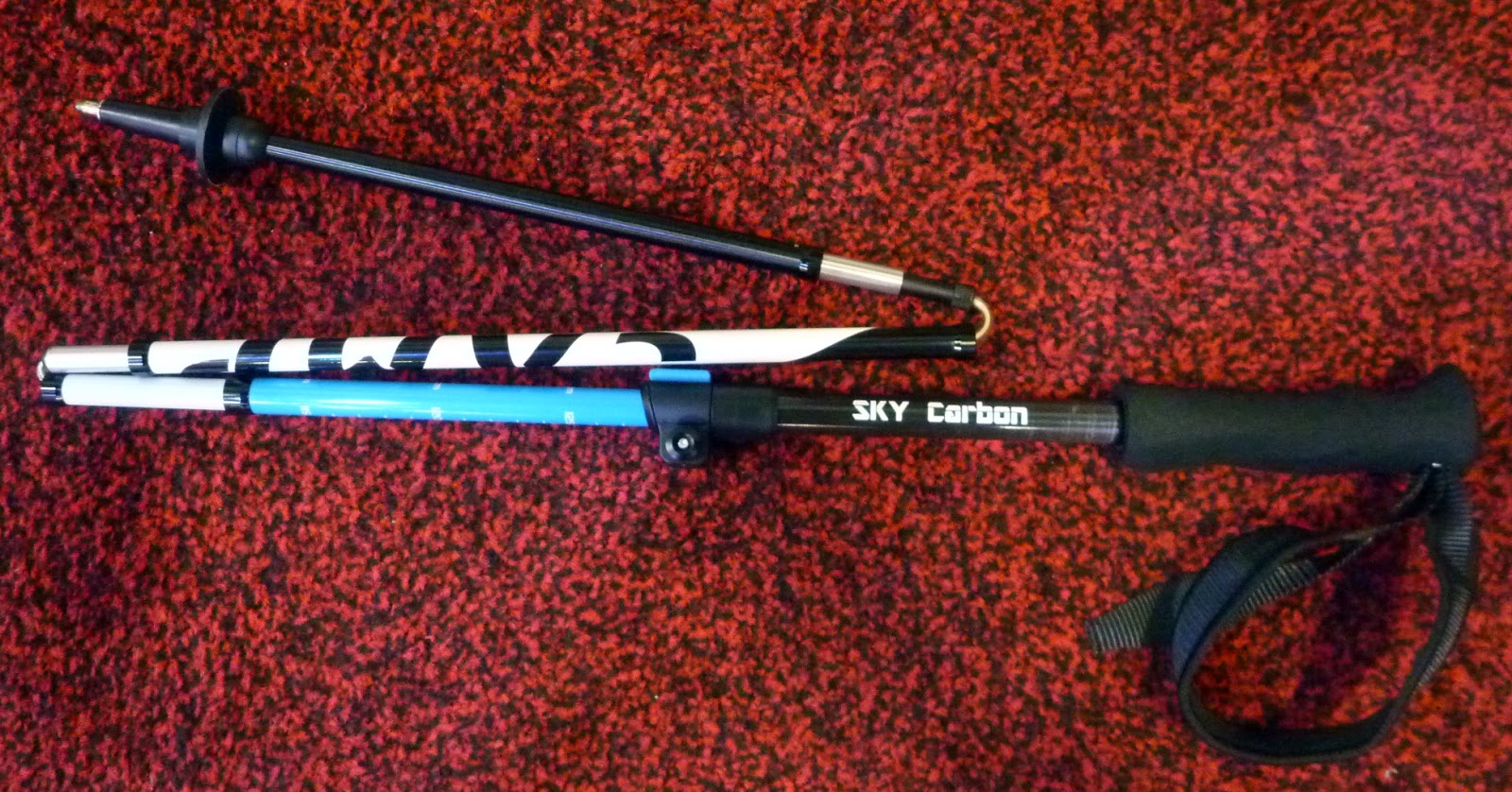
CAMP Sky Carbon Trekking Poles. These 3-piece poles adjust from 115 to 135 cm and are 36 cm collapsed. They are made of carbon fiber and aluminum alloy. Weight is 13.3 ounces/pair and MSRP is $150.

CAMP Corsa Ice Axe. At 7.1 ounces, the Corsa is claimed to be the lightest ice axe in the world. The head and shaft are 7075-T6 aluminum alloy. Available in 50, 60, and 70cm lengths. This is the perfect ice axe for backpackers who might need an ice axe on early season trips. MSRP is $160. Available now.

Hydrapak Arctic Fusion Hydration System. The TPU foam insulation on the drink tube has been tested to -20F for 1 hour. It has an 85 fluid ounce TPU reservoir with a center baffle and a slide top closure for easy filling and cleaning. Total weight is 5.5 ounces. The tube can be purchased separately for $20, or the whole system for $40. Available spring 2016.

Hydrapak Seeker Flasks. The new Seeker Flasks, made of TPU (Thermoplastic Polyurethane), are so tough you can stand on them. They will be available in 1 liter (1.3 oz/$19), 2 liter (1.7 oz/$21), and 3 liter (2.1 oz/$22), which is similar to Platypus and other flasks. They have attachment points so they can be attached to a pack or limb in camp. Their 42 mm Flow Control cap allows you to drink or pour with ease. Available spring 2016. At this time there is no drink tube available so you can use the Seeker as a hydration reservoir.

Hydrapak Ultraflask. This type of water bottle isn’t just for ultra runners; it would also work well in a shoulder pouch for ultralight backpacking. When hiking where water is plentiful, it saves weight by carrying only a small amount, and the Ultraflask provides easy access. You simply squeeze it to dispense water. It’s available in spring 2016 in two sizes: 450 ml (1.3 oz/$19) and 600 ml (1.4 oz/$21). It’s made of very durable TPU plastic. 

Klymit Inertia Ozone Sleeping Pad. As with other pads in the Klymit Inertia series, this one is also full of holes to save weight. The unique feature of this pad is its attached pillow. Pad dimensions are 21.5x72 inches, weight is 12.5 ounces, and MSRP is $89. A bonus is it blows up very quickly.

Snow Peak LiteMax Titanium Stove. At 1.9 ounces, the LiteMax is now Snow Peak’s lightest stove. It does not have a piezo igniter, and one is not currently available as an add-on accessory. It produces 11,200 BTU, a tad more than their Gigapower stoves. And it’s very collapsible. MSRP is $60; available now.

Sea to Summit Ultralight Sleeping Pad. The recently introduced STS sleeping pad line has already gained a reputation for being comfortable and supportive. The Ultralight model is the lightest in the series. I want to point out that the Ultralite is available in a Short version, which is actually a mummy length measuring 21.5x66 inches, weighs 11.5 ounces and costs $100. The full length pad (shown) is 72 inches long, weighs 12.5 ounces, and costs $119. It’s temping to get the full-length pad. Available now.

Travelon Packable Multi-Pocket Backpacks. Two styles, lots of pockets as the name implies, lightweight, 8 ounces, $35, available now.

Yukon Charlie FlipOut Trekking Poles. This is a three-section collapsible pole available in carbon fiber or aluminum. The carbon version weighs 12 ounces, costs $99, and is available now. The first section provides adjustability from 110 to 130 cm, and its 35 cm long when collapsed. Available now; this is a great value.

Monday, January 11, 2016

Outdoor Retailer Winter 2016: SNOW SPORTS


By Will Rietveld

Please note that this article simply highlights new lightweight gear of interest, and by no means is it comprehensive of the category or constitute a review of the item.  It’s simply a collection of new interesting gear for lightweight backcountry travel.

Items featured will be available in spring 2016 unless stated otherwise. Weights are for men’s size Medium apparel or size 9 footwear.

Northern Lites Snowshoes. I was pleased to discover Northern Lites snowshoes at the demo event; with new company owners at OR for the first time. I have a lot of experience with these snowshoes, having reviewed the Elite and Backcountry models for Backpacking Light Magazine. The snowshoes are essentially unchanged from the ones I tested. The 8x25-inch Elite is their lightest at 2.5 pounds/pair and $249; the 9x30-inch Backcountry provides more flotation at 45 ounces/pair and $269. Northern Lites have retained their distinction of being the lightest snowshoes available (other than a race shoe).
 

Black Diamond Helio Ski Poles. These fixed-length poles are bladder molded carbon fiber, and have ski baskets. As you can see in the photo, the handle is molded-in and hollow. The lower part of the pole is thicker carbon fiber for extra strength. Weight is 9 ounces per pair and MSRP is $299/pair.

Black Diamond Cirque 35 Pack. This Dyneema Gridstop ski pack has ski loops on the sides, top and side access, and tool attachments. Weight is 2 pounds 4 ounces and MSRP is $200. It will also be available in 30 and 45 liter sizes.

CAMP Kristal Gaiter. These 16.5-inch tall gaiters weigh just 3.2 ounces/pair. They’re made of silicone coated B-Dry Evo ripstop nylon with taped seams, so they are completely waterproof. Features are a front water-resistant zipper, adjustable Dyneema cords underfoot, and elastic tensioners at the top and lace hook. MSRP is $60; available now.

Louis Garneau Phenom Snowshoe. These 25-inch long snowshoes have a Boa closure on the binding for quick in/out and precise tightening. Weight is 3.1 pounds/pair and MSRP is $300.

Louis Garneau Transition Boa Snowshoe. Length is 23 inches, 2.4 pounds/pair, $200. Available now.

Polaris eBikes. Polaris (the snowmobile company) had several electric snow bikes available for testing at Outdoor Demo. They have a 750 watt motor and Lithium ion battery. Simply pedal to get started and shift gears as needed; the electric motor and computer kick in to provide as much power as needed. The rider can pedal as much as he wants to generate additional power to extend battery life and speed. Several versions are available for travel on urban trails, mountain bike trails, and packed snow. MSRP ranges from $2,500 to $5,500 depending on the configuration. Available now.

Scarpa Alien Series Ski Boots. The Scarpa Alien 3.0 (left) is a minimalist carbon fiber ski boot weighing just 1 pound 4.3 ounces per boot. The cost for these uberlight boots is just $2,999. The Alien 1.0 (center) is a combination of carbon fiber and plastic, weighs 1 pound 8 ounces/boot, and costs just $1,799. The all-plastic Alien (right) weighs 1 pound 15 ounces/boot and costs $799. The venerable Scarpa F1 (not shown) is updated for fall 2016; 2 pounds 11 ounces/boot; $699. All have a Boa tightening system on the lower part of the boot, which saves weight and provides easy and precise adjustment throughout the day. The Alien and Alien 1.0 are available now.

Snow Gliders. These are basically a snowshoe alternative, enabling faster travel over snow once you master the technique. They are claimed to provide the traction, stability, and control of snowshoes with the speed of skis. The underside has a climbing skin strip on the length of the glider, so you can kick and glide over more gentle terrain. Two models are available with numerous binding options. Optional adjustable cleats slow you down on steep downhills. Expected MSRPs are $299 without cleats and $399 with cleats; this is a product looking for a manufacturer.

Yukon Charlie Carbon Flex Snowshoe. These 9x28-inch injection-molded snowshoes have some rocker, lots of flex, an unusual honeycomb pattern, Northway Spin binding, and heel lift. Weight is 4.9 pounds/pair and MSRP is $199. The honeycomb pattern is innovative, but I wonder if they might have a problem with wet snow packing into the pockets. Note: these snowshoes do not contain any carbon fiber; they just have a carbon fiber appearance.


Fischer Traverse Carbon Ski Boot. This makes use of carbon fiber to bring the weight down to 34.6 ounces/boot, which is pretty good for a full-featured downhill ski boot. Tech binding only. They have a Boa closure system on the lower boot and one buckle at the top. $900.

Monday, December 14, 2015

GEAR REVIEW and My Favorite Gear #2 Will Rietveld's Mountain SuperUltraLight Gear List

I launch my new Favorite Gear series by providing my summertime Mountain SuperUltraLight (MSUL) gear list. It’s focused on summertime backpacking in the mountains, as explained in my 7-part Backpacking Light article on Mountain SuperUltraLight Backpacking. Normally SuperUltraLight (SUL) backpacking has a base pack weight under 5 pounds, but MSUL adds an extra pound to provide the extra shelter, insulation, and rain protection needed to be comfortable and secure while backpacking SUL in the mountains. The target base pack weight of MSUL is under 6 pounds.

Category
Gear Selection
Weight (oz)
Details
Packing

Gossamer Gear Murmur pack
10.80
2014 model, 2200 cubic inches
Lite Trail NyloBarrier Packliner
1.50
Plus oven roasting bag for front pocket
Sleeping 
Montbell Down Hugger 900 #2 sl. bag
23.65
23F, 900 fill-power down
Kooka Bay Inflatable Torso Pad
5.30
3/4 length
Shelter
Six Moon Designs Deschutes Tarp 
10.30
Enclosed shelter w 6 Ti stakes, guylines, groundsheet
Cooking
Trail Designs Caldera Keg-F 
5.80
Alcohol system. Includes plastic drink cup
Sea To Summit Short Handled Spoon
0.30
Anodized aluminum
Water 
Steripen Freedom UL
2.65
Filters to 0.1 micron
1-gal Smelly Proof plastic sealable bag
0.40
For treating water with Steripen
Sawyer flask, 1 Liter
0.80
For camp water or extra water on the trail
Ditty Bag
Photon II, toothbrush, pills, 1st aid, sunscreen, bug repellent, TP system, ear plugs, writing paper, pencil stub, backup water treatment
3.90
Misc. small items in a Cuben Fiber sack
Rain/Wind Gear
Montbell Versalite Pant
3.95
Rain pant
Berghaus Vapourlight Hypersmock 2.0
3.20
Rain jacket
ZPacks Cuben Fiber Rain Mitts
0.80
Rain mitts
Clothing Carried
Montbell Plasma 1000 Down Jacket
4.80
1000 fill-power down
REI Silk long john bottom
3.20
Lightest long johns available
Rab MeCo 165 Glove Liner
1.00
Wool and Cocona
WindTech Windstopper Hat
1.40
Ear flaps, Velcro chin tab
Possum Down Socks
2.29
Midweight, sleeping socks
Berghaus Vapourlight Jacket
6.00
Reversible insulated jacket
Subtotal
Base Pack Weight
92.04
5.75 pounds

As you can see my base pack weight is well under 6 pounds, so I can opt for a more comfortable sleeping pad if I want and still keep under the weight limit.

Following articles will focus on my selection for each piece of gear, and it will include good alternatives when they exist. I won’t restrict my gear picks to MSUL limits, so I will also highlight alternatives that will fit within the UL base weight limit of 10 pounds. With the gear choices we have nowadays, it is very easy to design a gear kit that is well within the UL weight limit.

GEAR REVIEW and My Favorite Gear #1 New Series Coming: My Favorite Gear

It’s been quiet here for about a year, but that’s about to change. After writing for Backpacking Light Magazine for 12 years, I have decided to move on and concentrate my efforts here. Backpackinglight.com has updated their website, and recruited a new cadre of writers, so we can look forward to some interesting content there.

At Backpacking Light I wrote hundreds of gear reviews and gear articles over 12 years. The articles are still there, but it requires a subscription to see them; use the website's search function to find them. I enjoyed my tenure with BPL, but now its time to move on. I still  get out backpacking as much as I can, and I still enjoy writing about it -- here. (Illustration credit: Mike Clelland!)
For me, I now prefer the independence of focusing on my own website, sharing what I know with those interested in reading up on lightweight and ultralight backpacking. Visiting here is free, of course, and you are encouraged to comment and add your thoughts.

I am launching a new series called My Favorite Gear, which will be a series of articles on my gear choices for my ultralight gear kit. Actually I will eventually post two gear lists: one for summer backpacking (warmer temps), and the other for the shoulder seasons (cooler temps). I will eventually get to my gear choices for lightweight backpacking and day tripping.

I realize, based on forum discussions, that hikers have very diverse needs and preferences for the gear they choose, so it’s always a lively discussion. However, most everyone is looking to lighten up more, and make improvements in their gear kit, and are looking for recommendations from experienced ultralighters. And that’s where this blog, and those of my fellow outdoor writers come in – we’re passionate believers in ultralight backpacking, and want to help others come over to the light side.

Articles coming in this series will focus on my selection for each piece of gear, and I will include good alternatives when they exist. I won’t restrict my gear picks to SuperUltraLight (SUL) limits; I will also highlight alternatives that fit within the Ultralight (UL) base weight limit of 10 pounds. With the gear choices we have nowadays, it is very easy to design a gear kit that is well within the UL weight limit.